How to Choose
You do not need to be an expert. A few simple ideas and a willingness to slow down are all it takes.
The Basics
A Short Vocabulary for Fragrance
You do not need to be an expert. But a few simple ideas will help you talk about what you are smelling — and narrow down what you are looking for.
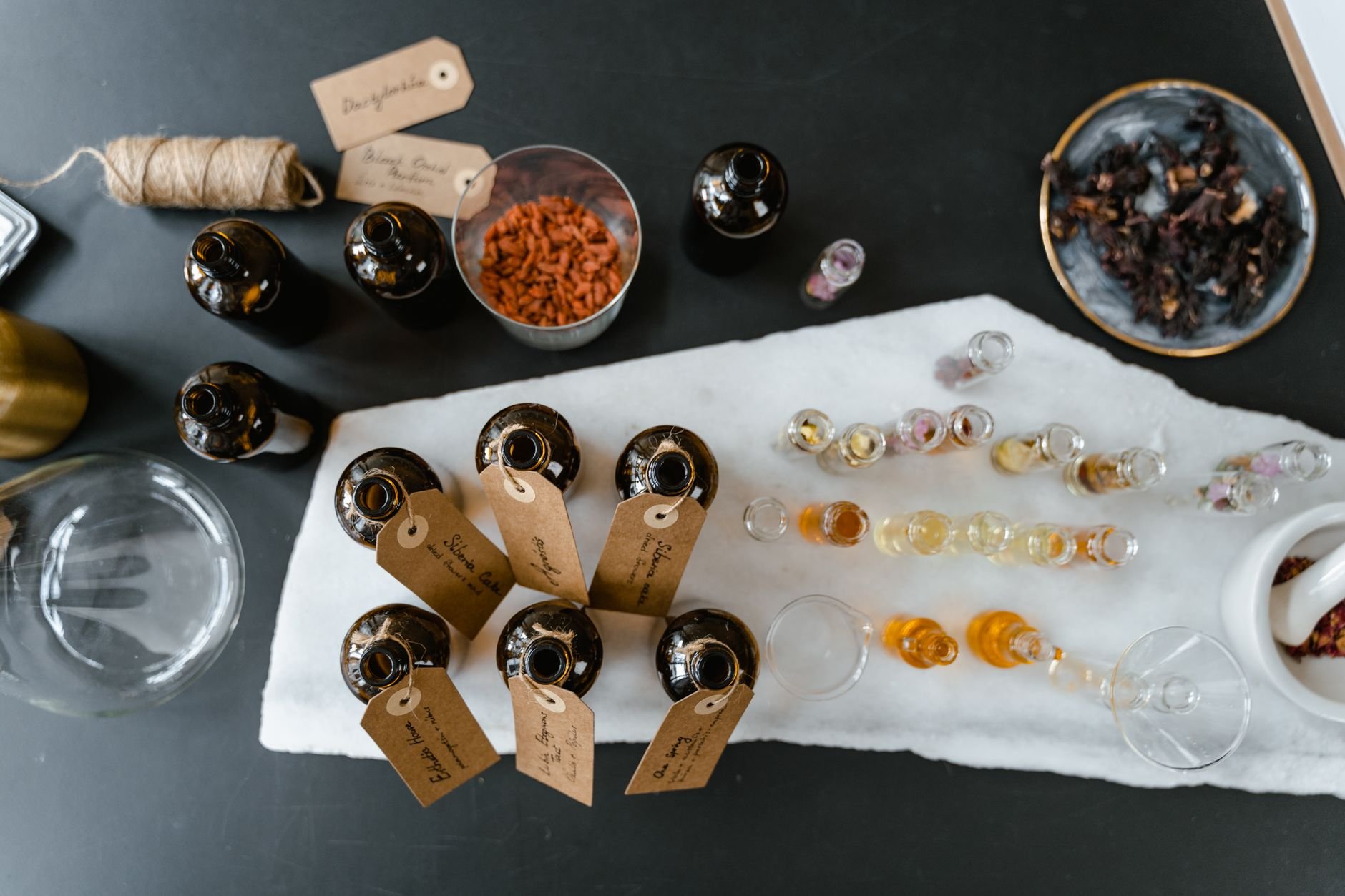
The Pyramid
Top, Heart, and Base
Every fragrance unfolds in stages. The top notes arrive first — bright, sharp, gone within minutes. The heart is what the fragrance truly is: floral, spiced, green. The base settles after half an hour and lasts through the day. When you test a scent, give it the time it needs to show you all three.
This is why a fragrance on a strip and a fragrance on your skin are different creatures. The strip can tell you about the top; only skin tells you the rest.

Concentration
Eau de Parfum vs Parfum
Concentration tells you how much aromatic oil is in the mix. Eau de Toilette is lighter and shorter-lived. Eau de Parfum sits in the middle — the most common format and the most versatile. Parfum is the richest concentration, longest-lasting, and often subtler on the initial spray.
For everyday wear, Eau de Parfum tends to strike the best balance. For an event, or a skin that tends to eat fragrance quickly, Parfum is worth considering.
Fragrance Families
Find Your Nose
Most fragrances belong to one or two families. Knowing yours makes narrowing down much easier.
Woody
Cedarwood, sandalwood, vetiver, oud, patchouli
Grounded. Earthy. Lasting.
Floral
Rose, iris, jasmine, violet, peony
Luminous. Soft. Present.
Citrus
Bergamot, lemon, grapefruit, neroli, yuzu
Fresh. Sharp. Energising.
Oriental
Amber, incense, musk, benzoin, cardamom
Warm. Complex. Layered.
Fougère
Lavender, coumarin, oakmoss, geranium
Cool. Clean. Assured.
Gourmand
Vanilla, tonka bean, cocoa, caramel
Rich. Enveloping. Sweet.
Questions
Common Questions
If you do not find what you are looking for, send us a message.
Get in TouchHow many fragrances should I test at once?
Two or three per session is ideal. Your nose fatigues quickly, and a fourth scent tends to smell like everything before it combined. If you want to test more, come back on another day. Coffee beans do not "reset" your nose — rest is the only reset.
Should I test on skin or on a strip?
Both have a role. A strip is fine for the first impression — the top notes. Skin tells you everything else: the heart, the base, and how the fragrance reacts with your chemistry. A scent that works on a strip may surprise you on skin, in either direction.
What does "unisex" or "gender-free" actually mean?
It means the fragrance was not formulated with a gender in mind. The scent itself has no gender. Some unisex fragrances lean traditionally feminine or masculine in tone — but they carry no label, and no assumption about who should wear them.
How long should a fragrance last?
This depends on the concentration, the formula, and your skin. Eau de Parfum generally lasts four to six hours. Parfum can last considerably longer. Dry skin tends to drink fragrance faster than oilier skin. If longevity matters to you, apply to pulse points and consider a fragrance-free moisturiser underneath.
Can I ask for a recommendation?
Yes — that is exactly what we are here for. Tell us what you are drawn to (a feeling, a situation, a note you have enjoyed before), and we will suggest something from the edit. Use the contact form and we will come back to you.
Begin Here
The Edit Is Waiting
Scents chosen for character, not category. Explore the full collection and find the one that feels entirely your own.